Why DIY Pigeon Deterrents Often Stop Working
Plastic predators, reflective tape, noise devices, and strong-smelling products may create a short-term change, but pigeons often adapt when the deterrent does not create a real barrier.
Birds learn which threats are harmless
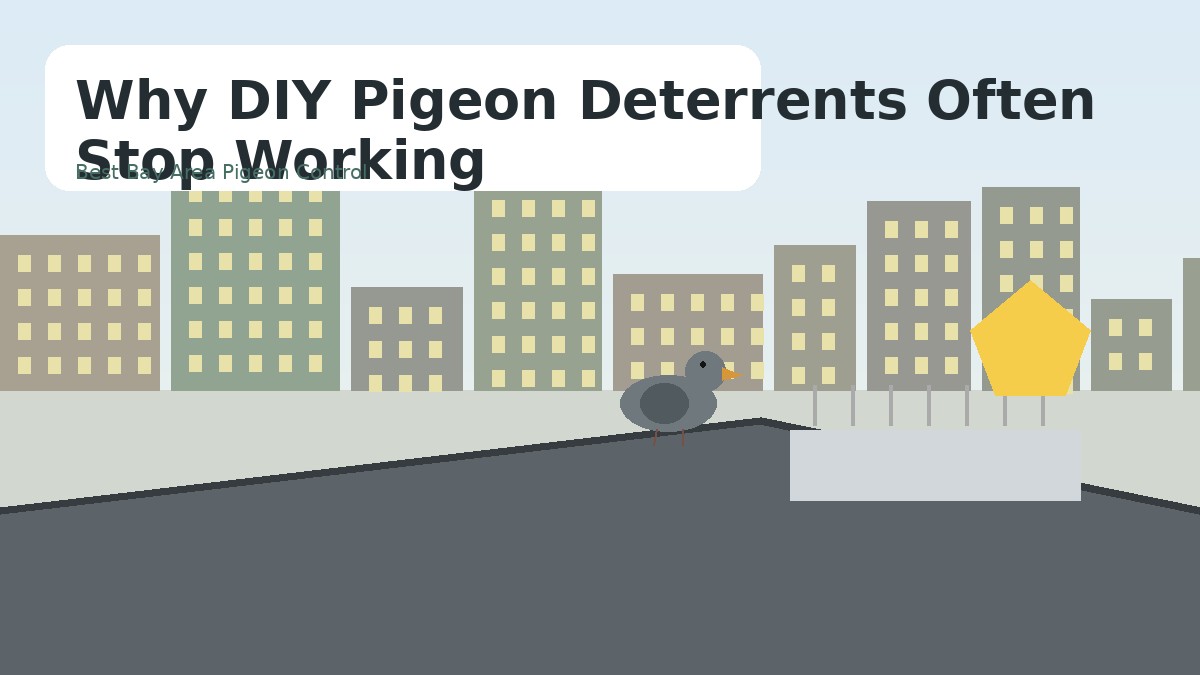
A stationary owl or hawk model becomes part of the scenery when it never moves or interacts with the flock. Habituation can happen quickly in a familiar nesting area.
Weather weakens temporary products
Wind, sunlight, and moisture damage lightweight tape, gel, and improvised mesh. Loose materials can also create maintenance problems of their own.
The protected area may be incomplete
Blocking one ledge can simply move birds a few feet away. A useful plan identifies all nearby landing, feeding, and nesting points rather than treating the most visible spot only.
Established colonies require stronger exclusion
Once pigeons have nested successfully, they have a powerful reason to return. Physical exclusion and habitat correction are generally more dependable than repeated attempts to frighten them away.